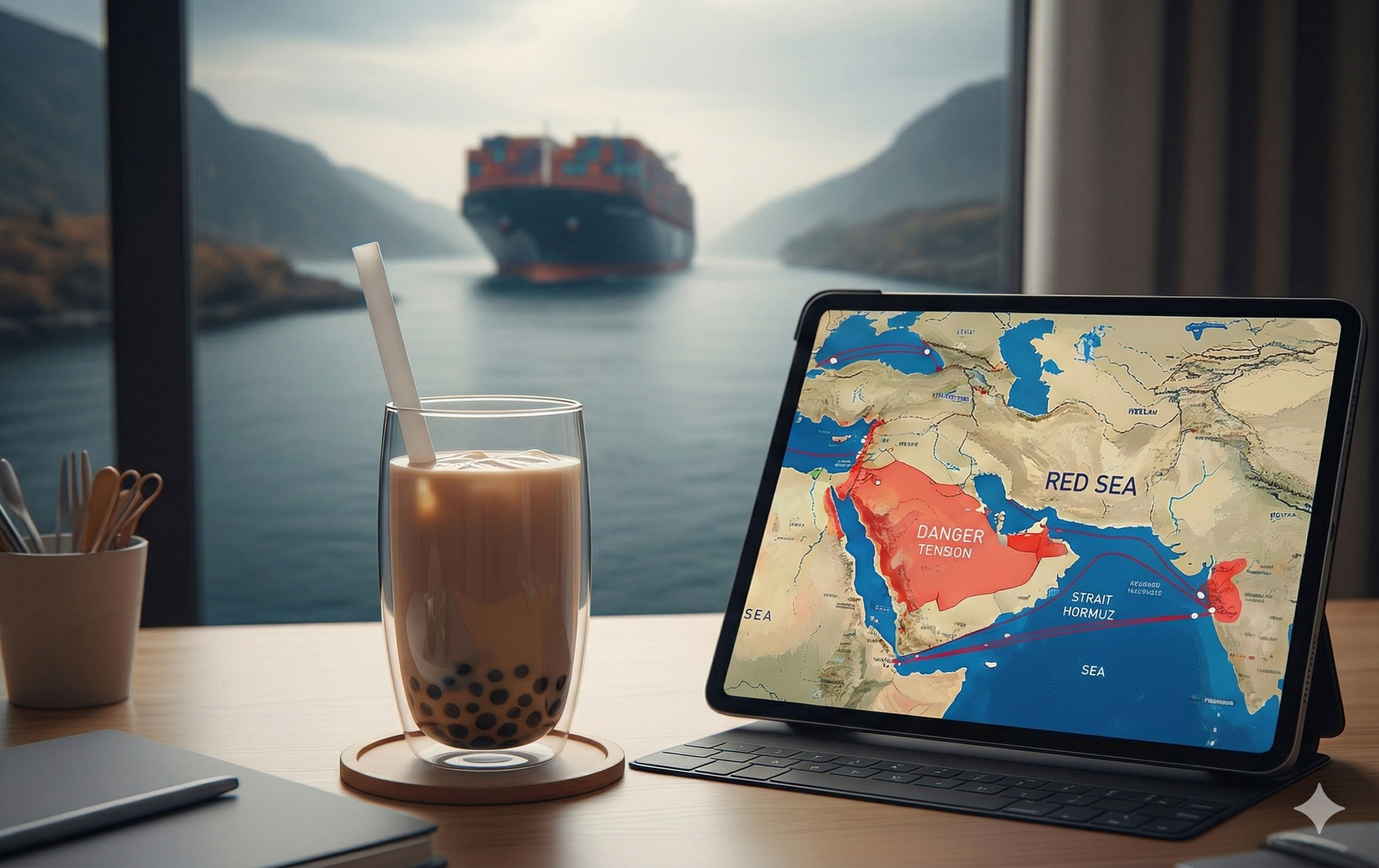

Impact Analysis Report: Middle East Instability on the Bubble Tea Industry
2026/04/01Due to the escalation of conflicts in the Middle East in 2026, what was initially a regional issue has now evolved into a global supply chain risk.
The primary driver is the disruption of transportation routes around the Strait of Hormuz, which has led to simultaneous increases in energy, shipping, petrochemical, and agricultural costs. These impacts are now rapidly transmitting across industries, particularly affecting the food and beverage sector.
For the bubble tea industry, the most immediate impact is the rising cost of plastic-related materials, including cups, sealing films, straws, and carrier bags. This is followed by increases in key raw materials such as syrups, tea leaves, and non-dairy creamers. At the same time, ocean freight costs, vessel schedules, and pricing stability have all become increasingly unpredictable.
As these pressures move downstream, the end consumer will experience more than just “a higher-priced cup of bubble tea” — it will lead to a fundamental shift in overall consumption expectations.
Customers will become more selective. As prices increase, they will demand more consistent taste, more refined packaging, and stronger brand value.
At the market level, we are already seeing polarization:
some buyers are becoming more cautious, delaying orders and reducing purchase volumes, while others are securing inventory early and requesting price locking.
Looking ahead, the key competitive factors will no longer be limited to pricing. Instead, they will focus on supply stability, fast quotation capability, flexible delivery, and risk management.
These are exactly the areas where we excel.
We welcome you to partner with us and explore our product range with free samples.
We are not just a supplier — we aim to be your risk management partner.